
Students use spectroscopy during the Dutch National Light Investigation project.
The GLOBE Netherlands foundation will be launching the Nationale Lichtmeting (National Light Investigation) campaign this winter. The Nationale Lichtmeting is an educational project in which students can get a free spectroscope to investigate the use of different types of lighting in Dutch households. Avantes values education and we believe learning about spectroscopy and its numerous possibilities are important for the technologists of the future. We are proud to support the GLOBE Netherlands foundation in this campaign.
This project is part of the international GLOBE Program. A worldwide science and education program that provides students and the public with the opportunity to participate in data collection and the scientific process, and contribute meaningfully to our understanding of the Earth system and global environment.
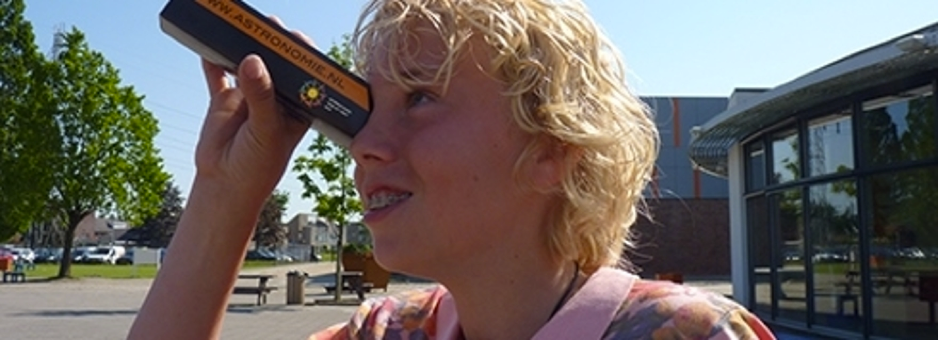
During the campaign, students will build their own spectroscope from kits provided at school. With these spectroscopes, students will learn about the kinds of lighting people use in the world around them: incandescent bulbs, compact fluorescent (CFL) bulbs, or LED lighting. This data is stored in a database (grouped by class) to create a national map showing what kind of lighting is used. The map was designed by the award-winning educational platform eduGIS. The data collected can be used, for example, to designate the most sustainable neighbourhood in the Netherlands.
During the experiment, students learn research methods and how to conduct spectroscopic light measurements. The experiment focuses on sustainable lighting. By choosing this type of measurement (spectroscopy) and the subject (sustainable lighting), this project introduces students to the study of photonics in a unique way.
GLOBE is a worldwide community of students, teachers, scientists, and citizens working together to better understand, sustain, and improve the Earth’s environment on a local, regional, and global scale. Currently, a total of 31,000 schools across 117 countries have gathered no fewer than 145 million measurements in the past 21 years.