
The thin film measurement setup is used to measure thin layers or “films” (nm-µm). This measurement technique makes use of the interference measured by light passing through layers. The thickness, refractive index, and extinction coefficient of the material determine the sinusoidal wave of the interference pattern.
The thicker the layer the higher the frequency of the waves is. Also, the frequency becomes higher at lower wavelengths. This means that you can determine the thickness of a layer by either determining the frequency of these sine waves directly from the measured spectrum (through Fast Fourier calculations), or by calculating a theoretical spectrum from lots of different values for thickness and matching these spectra with the measured one, yielding the best fit as the measured thickness. Both methods are available in the AvaSoft Thin Film application. In most situations, a reflection probe is used to measure thin films.
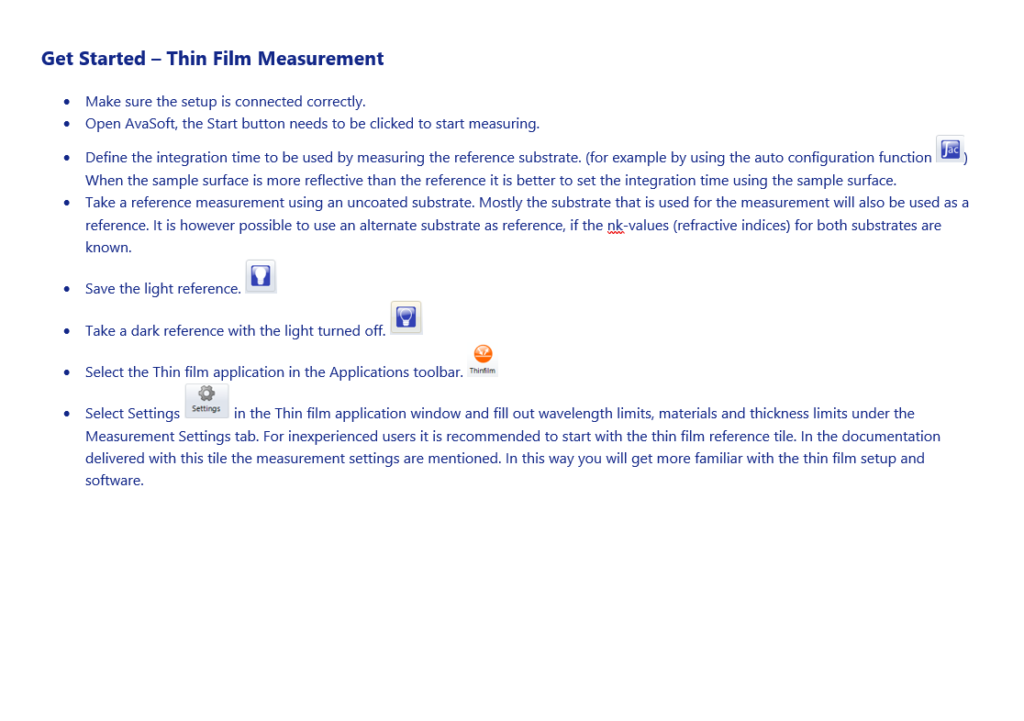
How to steps
FFT calculation:
D = Plamda1lamda2/(2N(lamda2-lamda1))
With:
D = Thickness
Lamda1 and lamda2 = peakwavelength off 2 peaks in the interference spectrum
P = number of fringes between the 2 peaks
N = refractionindex thin film material
The default thin film measurement setup from Avantes:
• Spectrometer
• Reflection probe
• Light source
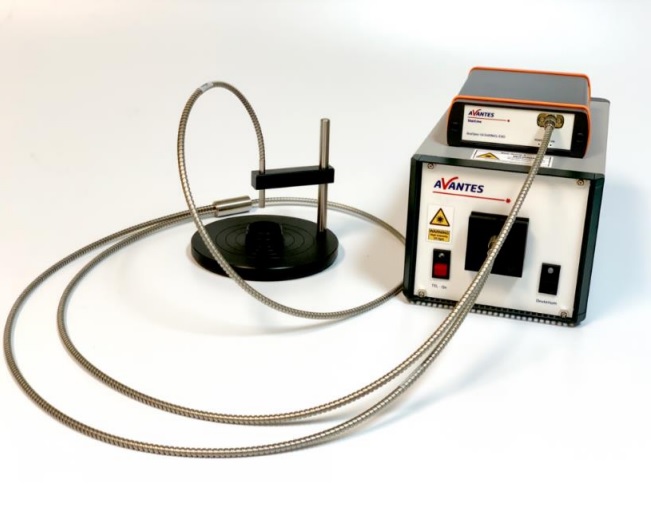
Additional components that are used for thin film measurements are:
• Thin film reference tile
• Thin film-stage
For further questions or instructions please contact support@avantes.com.