
Avantes is sending delegates to an official ground-based observation post along the North American Eclipse 2017 path of totality. Researchers and scientists from the National Science Foundation (NSF), National Aeronautics and Space Administration (NASA), and National Center for Atmospheric Research (NCAR) will be conducting experiments from a station in Casper, Wyoming. Aided with information from citizen scientists from across the country, the eclipse will provide an unprecedented opportunity for research and data collection.
Avantes engineers will be on-hand in Casper, Wyoming to witness the event from the incident path and support the researchers using Avantes equipment in experiments observing the sun’s corona and magnetosphere.
Eclipse 2017
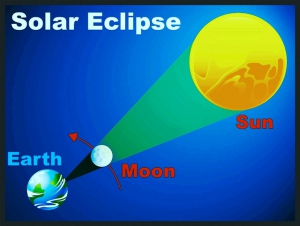
A full solar eclipse, where the moon aligns directly between the Earth and the sun is a rare opportunity for researchers and solar observers. During the occultation (when the sun is hidden behind the moon) the sun’s corona will be visible. This region of the sun, usually hidden in the sun’s glare, is a dynamic region that researchers are very interested in.
The 2017 eclipse is special because it will be visible across most of the country; the next total solar eclipse that will offer such widespread viewing opportunities will occur in 2045.
Path of Totality
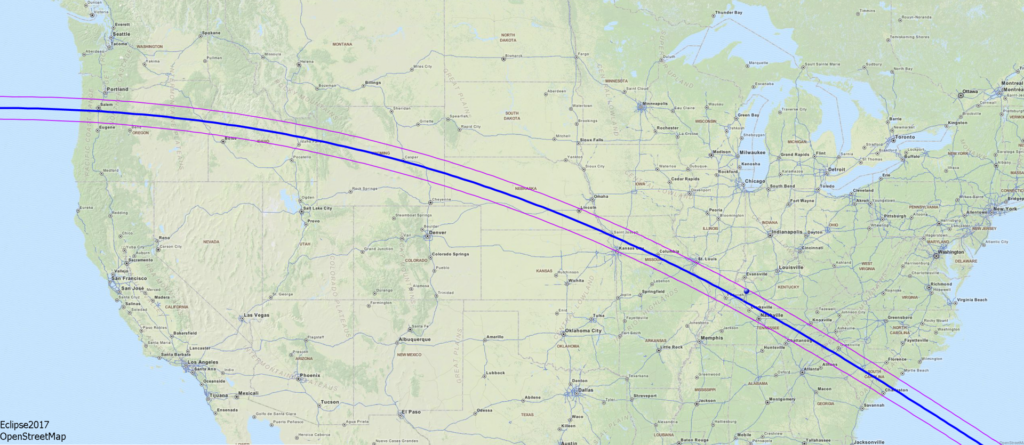
The highly anticipated celestial event takes place on 21 August, travelling in a path from Oregon to South Carolina. While the eclipse will be at least partially visible to much of the continental United States, the path of totality is an approximately 70 mile-wide stretch directly beneath the path of the sun. Observers in the path of totality will be able to witness the full eclipse for up to about two and half minutes and will experience the twilight created by the passing moon’s shadow. It will take an estimated ninety minutes for the eclipse to traverse the continent.
Coronal Layer
The dynamic region of the sun’s outer atmosphere is an aura of plasma extending millions of kilometres into space. This plasma is hundreds of times hotter than the sun’s surface, a phenomenon that remains a mystery to researchers. But because the corona is less dense, it emits less light, making it difficult to distinguish when observing from the Earth’s surface except during an eclipse.
The coronal layer is an active region comprised of charged particles that react to the sun’s magnetic fields to loop and swirl. During solar storms or coronal mass ejections, particles excited by these magnetic fields are hurled so fast that they escape the gravity of the sun. These solar winds are flung into the solar system, buffeting the Earth’s atmosphere and affecting satellites, communications, and GPS systems.

Spectroradiometric Solar Experiments
Avantes will lend researchers three spectrometers to use in solar observations allowing the collection of broad spectrum data during the eclipse. The AvaSpec-ULS2048CL-RS-USB2-INC4 will cover 300-1100 nm, getting data for both the visible and UV range. The Avantes AvaSpec-NIR256-1.7 will measure the near infrared from 950-1700 nm, and the AvaSpec-NIR512-2.5-HSC-EVO will extend measurements to the 1000-2500 nm wavelength range. To learn more about the eclipse experiments or to get information about these products, contact your sales engineer today.